
Better than a discount: buy-back through store credit, the new sell-through accelerator


For years, discounting has been the default response to unsold inventory. Seasonal sales, flash promotions, and markdowns have become standard tools to clear stock quickly. However, in a context of rising costs, margin pressure, and increasingly demanding consumers, this strategy is reaching its limits. Beyond short-term sell-through, brands must now protect their profitability, their image, and their relationship with customers.
Rather than relying on repeated price cuts, resale and buy-back programs are emerging as a smarter and more sustainable alternative. By reintegrating products into a circular model, brands can unlock new value, re-engage customers, and manage inventory without compromising long-term growth.
To fully understand why resale is emerging as a strategic alternative to discounting, it is essential to examine how this shift impacts profitability, brand positioning, inventory management, and customer relationships, before exploring how these elements come together to create long-term value.
1. Margins are hurt : resale offers a more sustainable revenue model
2. Brand perception can suffer : resale strengthens brand équity
3. Inventory issues aren’t solved : resale enables a circular flow of products
4. Customer loyalty is not built : resale creates ongoing engagement
5. From discounting to value creation
Have a closer look below at why discounting is not the solution to your challenges, and why resale offers a far more sustainable alternative.
1. Margins are hurt : resale offers a more sustainable revenue model
Discounting has an immediate and direct impact on margins. Each markdown reduces profit per unit and, over time, erodes the overall profitability of collections. Worse still, frequent discounts condition customers to delay purchases, waiting for sales instead of buying at full price. This dynamic weakens revenue predictability and undermines the perceived value of new products.
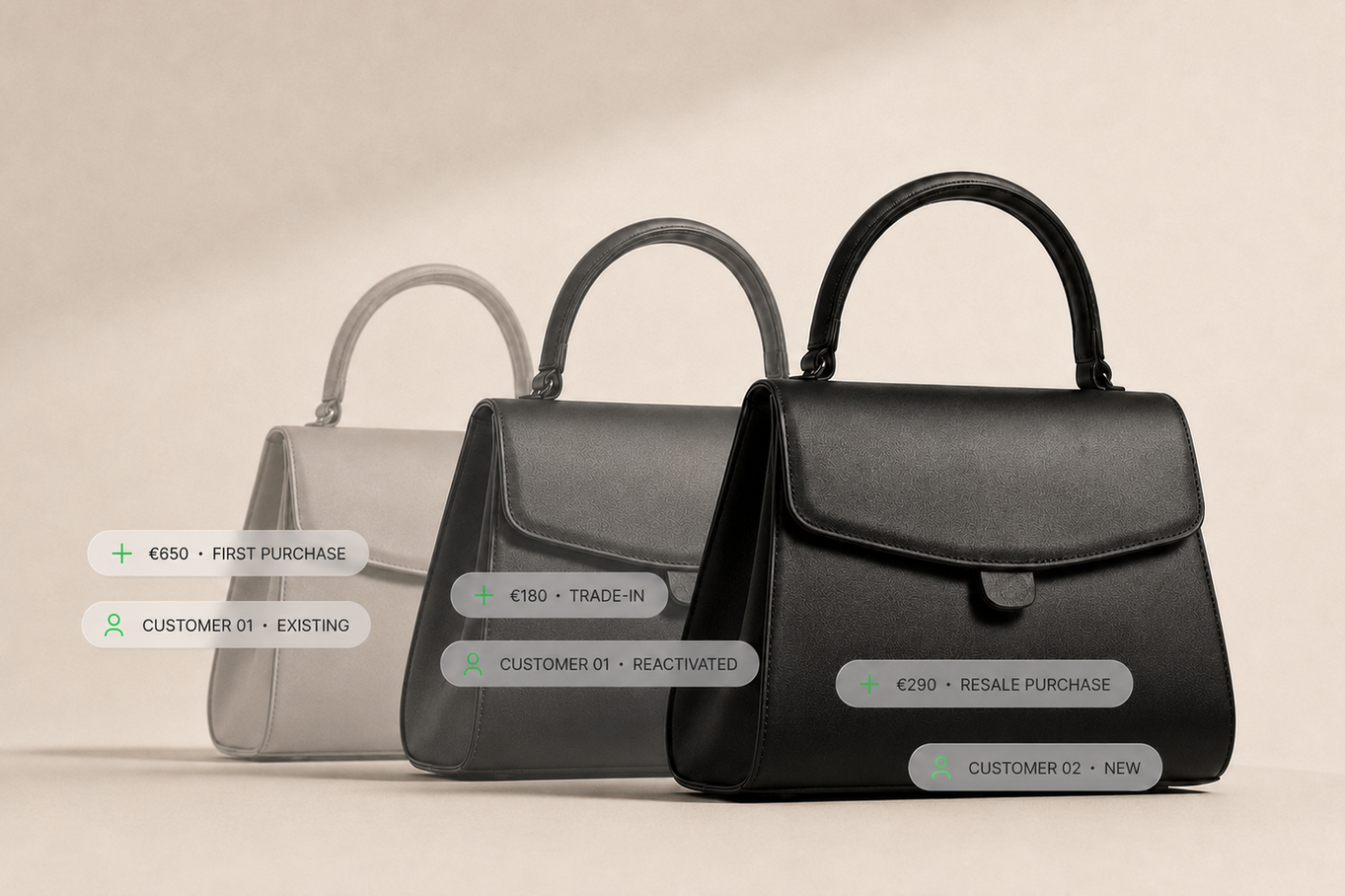
Resale, on the other hand, introduces an additional revenue stream that operates independently from new collections. By buying back and reselling products, brands generate incremental value from items already produced, without devaluing current assortments. This approach helps protect full-price sales while creating long-term financial sustainability.
2. Brand perception can suffer : resale strengthens brand equity
Heavy or recurring discounts can damage brand perception. When products are constantly marked down, exclusivity fades and the brand risks being associated with low prices rather than quality or desirability. Over time, this can dilute brand identity and weaken emotional connection with customers.
Resale shifts the narrative away from price and toward value. It highlights product durability, craftsmanship, and longevity. By embracing resale, brands position their products as timeless assets rather than disposable goods, reinforcing premium positioning and strengthening brand equity in the eyes of consumers.
3. Inventory issues aren’t solved : Resale enables a circular flow of products
Discounts may clear shelves temporarily, but they do not address the root causes of excess inventory. Overproduction, inaccurate demand forecasting, and low engagement remain unresolved, often leading to repeated cycles of markdowns and stock accumulation.
Resale enables a circular flow of products, where items are continuously reintegrated into the brand ecosystem. Instead of exiting inventory at a loss, brands extend the lifecycle of their products, transforming stock management into a strategic lever rather than a recurring problem. This circular approach supports both operational efficiency and sustainability objectives.
4. Customer loyalty is not built : resale creates ongoing engagement
Discount-driven strategies primarily attract price-sensitive, one-time buyers. These customers rarely develop a long-term relationship with the brand and are quick to switch to competitors offering deeper discounts.
Resale and buy-back programs foster ongoing engagement. Customers return to the brand not only to buy, but also to resell, trade, or upgrade products. This repeated interaction strengthens emotional ties, increases lifetime value, and builds loyalty through participation rather than short-term incentives.
5. From discounting to value creation
Rather than eroding value through repeated promotions, resale enables brands to turn existing products into strategic assets. It provides a credible alternative to discounting by protecting margins, strengthening brand positioning, and establishing a more circular, controlled approach to inventory management. In a context where value matters more than volume, resale also becomes a powerful driver of customer relationships, boosting retention, increasing average basket size, and fostering longer-term engagement.
From an economic standpoint, buyback and resale programs help move collections without relying on constant price reductions. The associated costs, collection, sorting, refurbishment, and reverse logistics, typically represent 15 to 25% of the value of the credit issued, but they do not offset the gains generated in revenue and customer loyalty. The objective is not to eliminate promotions, but to move away from a model where adjustments depend almost exclusively on discounts. By structuring official buyback and resale, brands restore a clear and coherent price hierarchy and build a smarter, more resilient growth strategy focused on long-term value creation.
Experience it yourself → Book a demonstration
See how Faume’s technology empowers leading brands to launch and scale their resale programs with ease.
Book a personalized demo with our team and discover how quickly your resale solution can go live, seamless, efficient, and built for measurable growth.
.png)
.png)



Stay ahead of the game!
Sign up to FAUME's The Secondhand Review newsletter
Read inspiring stories from brands that have successfully launched their secondhand businesses with FAUME