
“This isn’t a priority this year.” That’s exactly what brands used to say about e-commerce 10 years ago.

.png)
“This project is really interesting, but we have other priorities this year.”
That’s probably the sentence I hear most often.
Brands know it: resale has become a sales channel in its own right. They see the additional revenue opportunities, the customer data they can capture, the new audiences they can recruit, and the added value they can offer their communities.
And yet, many are still choosing to wait.
Meanwhile, the market keeps moving — fast. The second-hand market in Europe was already worth €18 billion in 2025, with more than €1 billion generated by Vinted alone. KPMG projects the market will reach €26 billion by 2030. Globally, second-hand is expected to surpass $350 billion by 2028.
But the real signal isn’t in the numbers. The real issue is no longer just market growth. It’s that consumer habits are becoming deeply ingrained.
For part of the younger generation, discovering a brand and making a first purchase through Vinted is already becoming more natural than buying directly from the brand’s own website.
Platforms are no longer just resale channels. They are gradually becoming the natural entry point to brands.
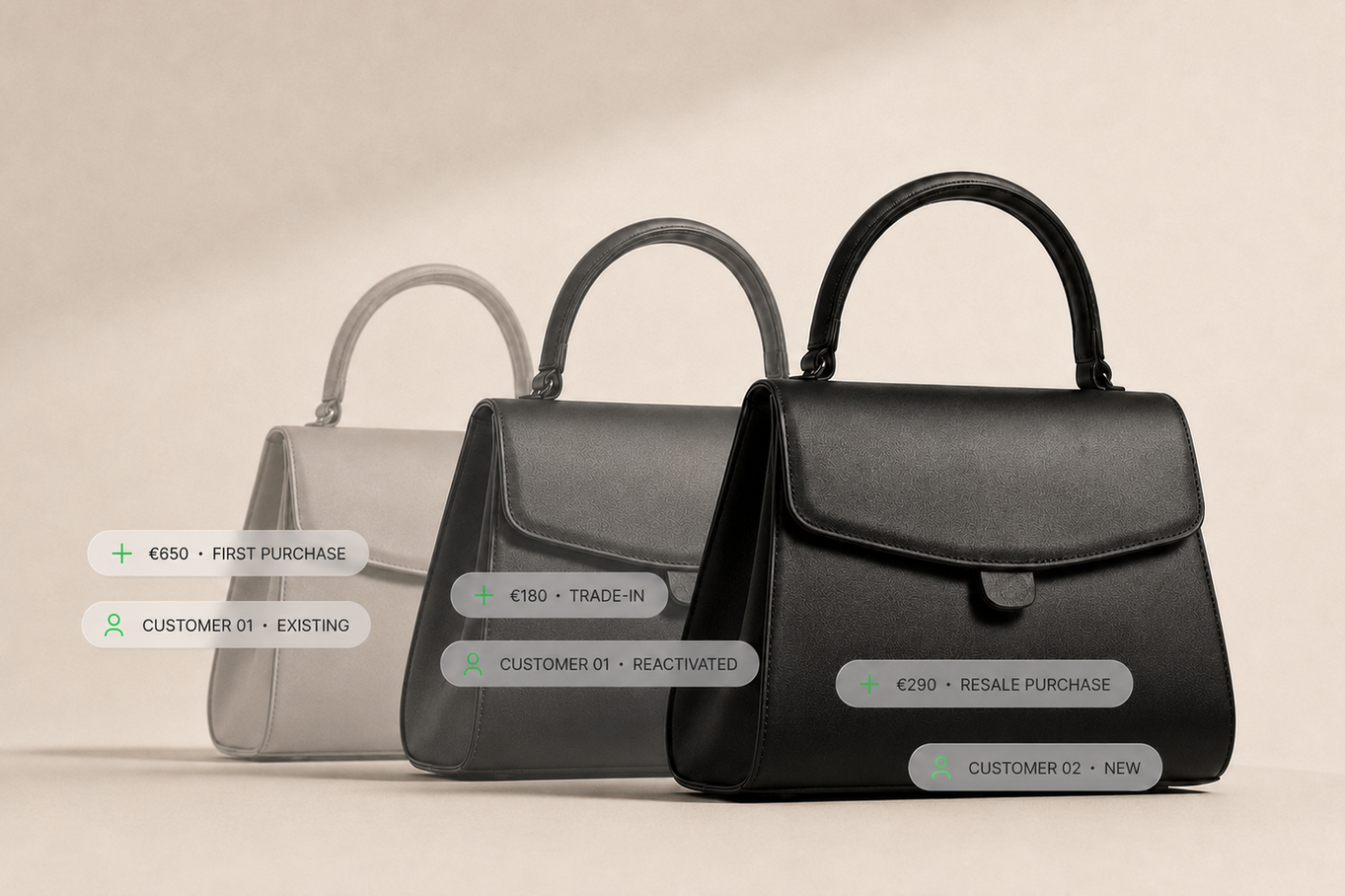
Younger consumers browse, compare, buy, resell, and assess product value there entirely outside the brands’ ecosystems. Without control over the customer experience. Without access to customer data. Without ownership of brand standards. Today, platforms are monetizing an attractiveness that brands spent years building.
The real issue is no longer today’s missed revenue. It’s the future cost of delay.
Every customer habit that takes shape outside a brand’s ecosystem today will translate into higher acquisition costs tomorrow.
The more platforms become the default place to buy and resell, the more expensive it will be for brands to bring those behaviors back into their own ecosystem. We’ve seen this before. Ten years ago, brands that delayed launching e-commerce paid a heavy price for it: skyrocketing acquisition costs, dependency on marketplaces like Zalando, ASOS, and Amazon, and customer habits already anchored elsewhere.
Resale is following the exact same trajectory.
The cost of inaction is not only measured in lost revenue today — around 5% of e-commerce-equivalent revenue at launch, and up to 15% at scale. It will also be measured tomorrow: in acquisition costs, in the difficulty of rebuilding direct traffic, and in the effort required to bring customers and behaviors back into the brand ecosystem.
In five years, the winners won’t simply be the brands that are present in resale. They’ll be the brands that succeed in becoming the default destination.
“This isn’t a priority this year.” That’s probably exactly what many brands were saying about e-commerce 10 years ago.
So — what are we waiting for to make resale a priority today?
.png)




Stay ahead of the game!
Sign up to FAUME's The Secondhand Review newsletter
Read inspiring stories from brands that have successfully launched their secondhand businesses with FAUME